

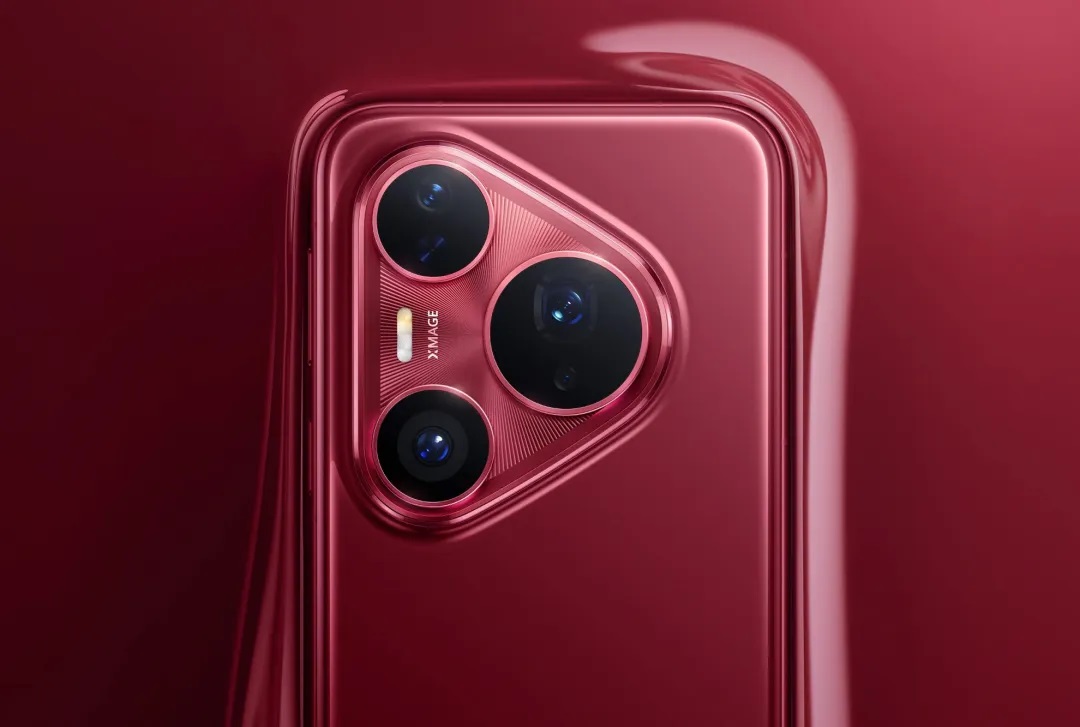
Huawei has officially unveiled its flagship Pura 80 series phones in China, with the top-tier Pura 80 Ultra leading the charge with a groundbreaking camera innovation. This new device introduces a remarkably clever trick: a “switchable” dual-lens telephoto camera system that allows two distinct lenses to share a single image sensor.
This design pushes the boundaries of smartphone photography and engineering, offering a unique approach to integrating advanced zoom capabilities within a compact form factor. The Pura 80 Ultra aims to deliver unparalleled photographic flexibility and quality, setting a new standard for mobile imaging.
The Revolutionary Dual-Lens Telephoto System
The core innovation of the Pura 80 Ultra lies in its sophisticated telephoto camera design, which maximizes efficiency and performance.
Shared Sensor and Periscopic Elements
Visually, both telephoto lenses are housed side-by-side within the largest of the three prominent camera rings on the Pura 80 Ultra’s rear. However, their shared nature extends far beyond a mere physical housing. Both lenses are ingeniously connected to the same set of periscopic elements and, crucially, share the same image sensor.
This complex arrangement utilizes a movable prism that precisely directs light from the chosen lens onto the shared sensor. This approach significantly differs from the variable telephoto systems seen in some Sony Xperia phones, which typically employ a single lens but alter the zoom distance by moving internal components within a periscopic structure. Huawei’s design offers a more direct and potentially more robust method for switching between distinct optical zoom levels.
Optical Zoom Capabilities and Sensor Specifications
The Pura 80 Ultra’s two telephoto lenses provide impressive optical zoom capabilities: 3.7x and 9.4x. For those who prefer focal length equivalents, these translate to 83mm and 212mm, respectively. This range is notably wider than what variable telephoto systems from competitors like Sony have managed to achieve.
The shorter 3.7x lens features an f/2.4 aperture and is listed in Huawei’s specifications as a 50-megapixel camera. The longer 9.4x lens, on the other hand, comes with an f/3.6 aperture. Curiously, despite utilizing the same underlying sensor, this lens is listed with a smaller 12.5-megapixel resolution.
This discrepancy suggests that Huawei might be implementing either sensor-cropping or additional pixel-binning techniques when the 9.4x lens is in use. These techniques could optimize image quality or manage file sizes, given the shared sensor architecture. The flexibility to switch between these two distinct optical zoom levels without compromising image quality is a significant advantage for mobile photographers.
Cost-Saving and Space-Saving Engineering
The decision to combine two telephoto lenses on a single sensor is not merely a feature to generate headlines; it represents a strategic engineering feat with significant practical benefits. Image sensors are among the most expensive and intricate components in modern smartphones. By finding a way to efficiently use one sensor for multiple lenses, Huawei could potentially achieve long-term cost savings in manufacturing. Furthermore, this design is a substantial space-saver.
Avoiding the need for two complete and independent periscopic systems frees up valuable internal space within the phone’s chassis. This clever internal design allows the Pura 80 Ultra to potentially maintain a slimmer profile while also making room for other high-quality components. The 1/1.28-inch-type sensor utilized here is notably larger than what most traditional telephoto cameras in smartphones offer.
This larger sensor size, likely enabled by the innovative dual-lens design, promises superior light gathering capabilities and better image quality, especially in challenging conditions. The engineering behind this system showcases Huawei’s commitment to pushing innovation in smartphone camera technology.
Beyond the Telephoto: Comprehensive Flagship Specifications
While the dual-lens telephoto system is a highlight, the Pura 80 Ultra is a full-fledged flagship phone with an impressive array of other premium features.
Main and Ultrawide Cameras
In addition to its novel telephoto capabilities, the Pura 80 Ultra boasts a powerful 50-megapixel main camera. This primary sensor features Huawei’s returning dynamic aperture design, which allows for variable aperture control, giving users greater creative control over depth of field and exposure.
Complementing these is a robust 40-megapixel ultrawide camera, ensuring comprehensive photographic coverage for various scenarios, from expansive landscapes to detailed close-ups. This triple-camera setup positions the Pura 80 Ultra as a formidable contender in the high-end smartphone photography market.
Display, Battery, and Durability
The front of the Pura 80 Ultra is dominated by a stunning 6.8-inch LTPO OLED display. LTPO (low-temperature polycrystalline oxide) technology enables dynamic refresh rates, contributing to both smooth visuals and improved power efficiency. Powering this impressive device is a substantial 5,700mAh battery, promising extended usage times even with demanding tasks.
For durability, the phone carries IP68 and IP69 ratings. An IP68 rating signifies resistance to dust and submersion in water, while an IP69 rating indicates resistance to high-pressure, high-temperature water jets. These ratings ensure the device can withstand various environmental challenges, making it a robust companion for everyday use.
Internal Hardware and Chipset Secrecy
Under the hood, the Pura 80 Ultra comes equipped with a generous 16GB of RAM and up to 1TB of internal storage, providing ample space for apps, media, and high-resolution content. However, Huawei has maintained its customary secrecy regarding the specific chipset that powers the Pura 80 Ultra. This practice has become standard for the company over the last few years.
It stems from the ongoing impact of US sanctions, which have compelled Huawei to develop its own proprietary chip technologies and keep details under wraps to protect its intellectual property and supply chains. While the exact processor remains unconfirmed, it is expected to be a high-performance Kirin chip, reflecting Huawei’s continued advancements in semiconductor design.
The Pura 80 Series: A Family of Flagships
The Pura 80 Ultra is part of a larger family of newly launched devices, each offering compelling features.
Four Models, Shared Design Language
Alongside the Ultra, Huawei also introduced three other models: the Pura 80, Pura 80 Pro, and Pura 80 Pro Plus. All four phones share a similar design language, showcasing a cohesive aesthetic across the series. Even the base model, the Pura 80, includes a capable triple rear camera system. It features a slightly smaller, yet still vibrant, 6.6-inch LTPO OLED screen and a robust 5,600mAh battery. This ensures that even the entry-level device in the series offers a premium user experience.
Pro and Pro Plus Differentiations
The Pura 80 Pro and Pura 80 Pro Plus share the same physical size as the Ultra. They also feature the same main camera and ultrawide camera specifications as the top-tier model. However, instead of the Ultra’s unique dual-telephoto system, the Pro and Pro Plus models each feature a single 48-megapixel telephoto lens.
The Pura 80 Pro Plus gains a slight edge over the Pro model by offering a little extra RAM and crucial support for two types of satellite communications. While all Pura 80 phones can connect to the Beidou satellite system for basic satellite communication capabilities, the Pro Plus extends this functionality, potentially offering enhanced features for remote connectivity. This tiered approach allows Huawei to cater to different user needs and price points within the premium segment.
Software and International Availability
The new Pura 80 series runs on Huawei’s latest operating system, with international release details yet to be confirmed.
HarmonyOS 5.1: Huawei’s Independent OS
All the new Pura phones launch running HarmonyOS 5.1, which is the latest iteration of Huawei’s proprietary operating system. Significantly, HarmonyOS is no longer based on Android, representing Huawei’s complete pivot to its independent software ecosystem.
This move underscores Huawei’s resilience in the face of ongoing geopolitical challenges and its long-term vision for its hardware and software integration. HarmonyOS offers a seamless and integrated experience across Huawei’s diverse range of devices, from smartphones to wearables and smart home products. Its continued development highlights Huawei’s ambition to create a self-sufficient and competitive ecosystem.
Pricing and International Release Speculation
The Pura 80 Ultra starts at CNY 9,999, which translates to approximately $1,390 USD. The Pro models begin at CNY 6,500, roughly $900 USD. As of the initial China launch, the regular Pura 80 has not yet gone on sale and its price has not been announced. Speculation regarding international availability is high.
Last year, the Pura 70 series launched internationally a few weeks after its debut in China. Industry observers are keenly watching to see if Huawei will follow the same pattern this year, bringing these innovative devices to global markets despite the complex regulatory environment. An international launch would allow a broader audience to experience the Pura 80 Ultra’s unique dual-lens telephoto camera and the advancements of HarmonyOS 5.1.

Axiom Space's highly anticipated next astronaut launch, designated Ax-4, is back on the schedule, albeit with a new target date after a series of unexpected delays. This mission marks Read more

The audacious endeavor of bringing extinct species back to life has taken a significant leap forward. Colossal Biosciences, a pioneering company at the forefront of de-extinction efforts, recently shared a Read more
Tech industry giant Intel, headquartered in California, is reportedly preparing for a substantial reduction in its workforce. According to recent reports citing internal information and sources, the company plans to Read more
The depths of the ocean continue to guard secrets from centuries past, offering glimpses into forgotten eras of trade, exploration, and swashbuckling adventure. Recently, a significant discovery off the Read more
Tonight, Sunday, June 1st, 2025, skywatchers are in for a treat! Our beautiful waxing Moon will share the western part of the constellation Leo with the fiery Red Planet, Mars. Read more

Dr. Rosemary Coogan, a highly accomplished British astronaut, is currently undergoing rigorous training with her sights set on potential historic space missions, including the ambitious goal of becoming the first Read more