

Amazon’s Fallout television series burst onto the streaming scene as a revelation. It quickly cemented its place as one of the most successful video game adaptations to date.
This is high praise, especially considering the often-troubled history of video game-to-screen transitions. The show achieved this by skillfully balancing reverence for the source material with innovative storytelling. It expanded the rich Fallout lore instead of merely re-treading old narratives. Crucially, it introduced a cast of original characters—from vault dwellers and ghouls to outlaws—who became as beloved as those from the games. Viewers deeply connected with Lucy, Maximus, and the Ghoul, investing emotionally in their journeys across the irradiated wasteland.
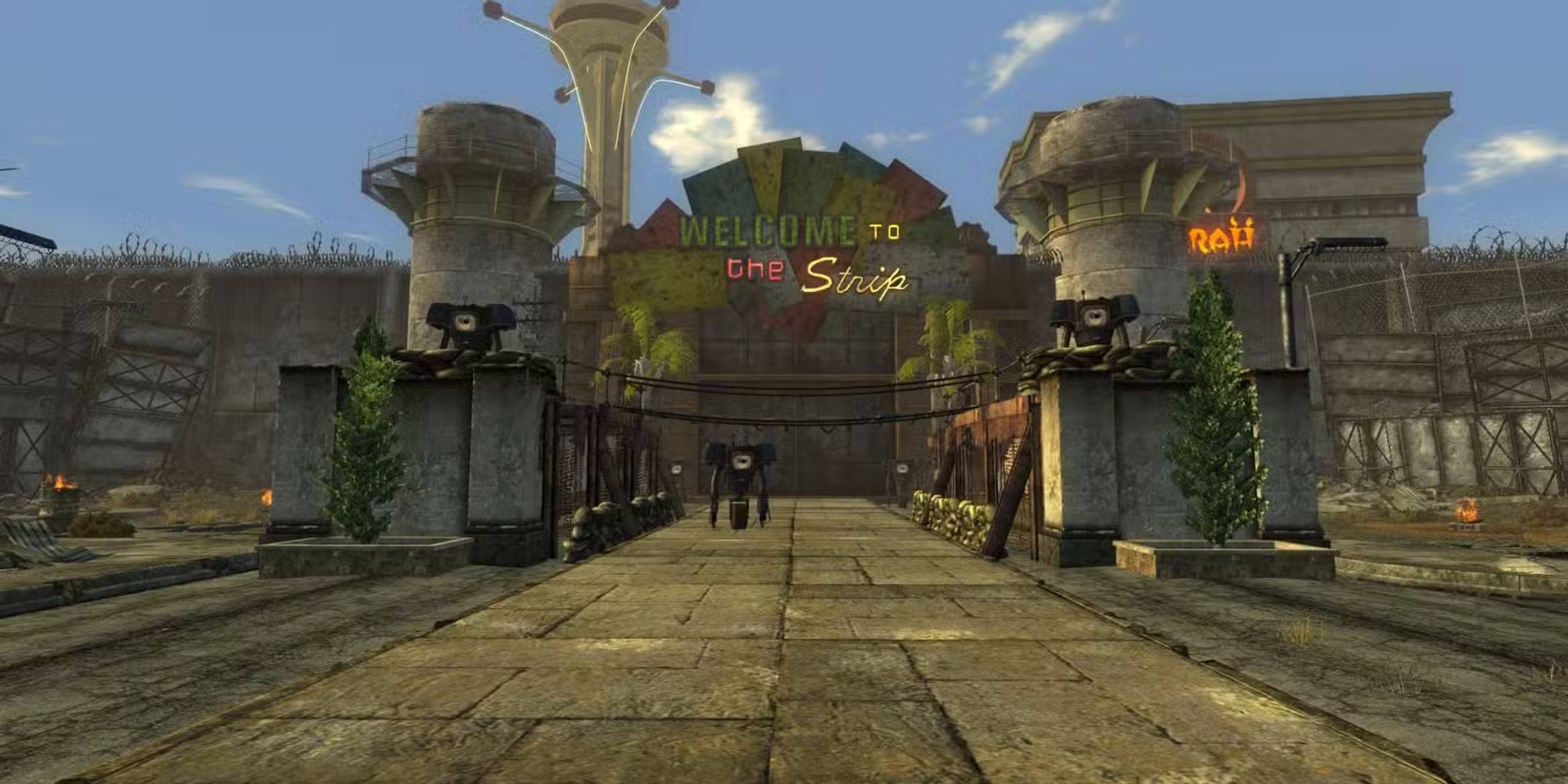
However, the immense success of the first season has now given way to a palpable sense of anxiety among fans. The final moments of Season 1 delivered a significant tease: the iconic locale of New Vegas. This city is set to be a primary setting in Season 2. For those deeply immersed in the Fallout universe, this reveal was both exhilarating and terrifying. Set photos have already begun circulating online. These images reportedly show meticulous recreations of New Vegas.
The visual accuracy seems promising. Yet, capturing the aesthetic is often the easiest part of adaptation. The true challenge lies in translating the complex spirit and intricate narratives of a beloved game into a compelling television experience. There is a profound fear that the show’s creative team might, inadvertently, “screw it all up.”
Why Fallout: New Vegas Reigns Supreme
For many long-time fans of the Fallout franchise, Fallout: New Vegas holds a special, often revered, position. Its reputation has grown significantly over the years, solidifying its status as arguably the best game in the entire series.
A Journey of Reappraisal
Like millions of other players, my personal entry into the Fallout universe began with Bethesda’s Fallout 3. That game immediately captivated me with its expansive world and unique atmosphere. Later, I pondered delving into the original, isometric Fallout games, which I’ve owned on Steam for over a decade. But that journey has yet to begin. My initial encounter with Obsidian Entertainment’s New Vegas upon its release in 2010 was, surprisingly, one of disappointment.
As someone who quickly became enthralled by Fallout 3, New Vegas initially felt like a step backward. Its launch was plagued with numerous bugs and glitches. This technical instability led me to question my initial admiration for Fallout 3. It felt as if my love for the franchise had been “ruined.”
Fortunately, Obsidian Entertainment dedicated itself to fixing the game’s issues. Through patches and updates, they steadily transformed it. Over time, Fallout: New Vegas not only shed its initial criticisms but also grew to become as, if not more, beloved than its predecessor. Its complex narratives and player freedom earned it a dedicated following.
With the second season of the Fallout show now in production, I felt compelled to revisit the Mojave Wasteland. I wanted to experience New Vegas again, 15 years after its original release, to see how it truly holds up. What I discovered was the game I had always hoped it would be. It wasn’t the flawed initial launch. Instead, it was a masterclass in role-playing and world-building.
The Heart of the Mojave Wasteland
Fallout: New Vegas encapsulates everything that fans cherish about the Fallout property within a single, cohesive package. Its core strength lies in its exciting, branching storyline. Player choices genuinely matter, leading to vastly different outcomes and playthroughs. The game also boasts incredible locales, each with its own distinct atmosphere and challenges, from the bustling New Vegas Strip to the eerie irradiated zones.
Perhaps most compelling is the mechanically intricate faction system. This system allows for diverse groups to coexist (or clash) across the vast Mojave Desert. As the player character, you are granted unparalleled freedom to choose your alliances. You can pit various factions against each other, manipulate their conflicts, or even attempt to forge unlikely truces. These choices directly determine your path through the irradiated landscape.
You might align with the formidable New California Republic (NCR), a sprawling democratic federation aiming to restore order. Alternatively, you could join any number of distinct gangs, each with their own over-the-top theming. For instance, Caesar’s Legion, a highly disciplined and brutal tribal society styled after ancient Rome, presents a fascinating moral dilemma. One can only imagine how uncomfortable Caesar’s Legionnaires must be in the scorching Mojave heat, burdened by their heavy, layered armor, not to mention the constant presence of blood.
New Vegas truly opened up the world of Fallout in ways that the preceding Fallout 3 did not. While Fallout 3 offered a vast sandbox, New Vegas’s map felt more densely populated with interwoven narratives. It was filled with diverse groups, unique towns, and even individual non-player characters (NPCs). Each had their own motivations, often seeking to use the player for their own ends. This created a dynamic and reactive world.
A Personal Journey Through the Wasteland
My recent playthrough of New Vegas was a revelation, far exceeding my initial disappointing experience. I formed unlikely friendships with ghouls (mutated humans) and super mutants (genetically engineered beings). I joined a quirky, Elvis-obsessed street gang known as The Kings, immersing myself in their unique culture. I even actively worked against the powerful and enigmatic Mr. House, the reclusive human-computer hybrid who governs New Vegas, turning his “life”—if you can call his existence that—into a living hell by raiding his territories and plotting his downfall. These interactions made the world feel incredibly alive and responsive to my choices.
This latest playthrough was everything I had wanted from New Vegas the first time around. I meticulously worked my way through the entire main story, exploring different possible endings based on my allegiances. I even delved into the game’s downloadable content (DLC), which significantly expanded the narrative and gameplay. While most of the DLC was excellent, particularly “Dead Money” and “Honest Hearts,” one exception stood out: “Old World Blues,” which, for me, was a notable misstep.
Having now experienced New Vegas in its full, intended glory, my admiration for the game is immense. But this deep appreciation also fuels my trepidation about Amazon’s adaptation. The stakes feel incredibly high.
The Peril of Adaptation: Learning from Past Mistakes
Adapting a beloved video game into a film or TV series always carries inherent risks. While I generally approach such adaptations with excitement, my emotional connection to certain game narratives varies. I enjoy adaptations like Uncharted, Tomb Raider, or Twisted Metal, but their stories don’t resonate with me as deeply as those of The Last of Us or Fallout. This emotional investment makes the prospect of a misstep even more concerning.
The anxiety is compounded by recent events in the adaptation landscape. The Last of Us, another critically acclaimed video game adaptation, reportedly “fumbled” its second season. This raises a crucial question: if even a highly regarded show based on a beloved narrative can stumble, what does that mean for Fallout?
My concern is further amplified by the track record of Fallout executive producers Jonathan Nolan and Lisa Joy. Their previous major project, Westworld, began with an incredible first season. It captivated audiences with its intricate plot and philosophical themes. However, its second season saw the show “spin out of control,” losing its narrative cohesion and never truly regaining its footing. Westworld was ultimately canceled before it could conclude the sprawling story it had initially set out to tell. This history of a strong start followed by a decline in quality weighs heavily on fan expectations for Fallout Season 2.
The Scale of New Vegas vs. Season 1
Properly capturing the essence and scale of New Vegas is an ambitious undertaking. It makes the scope of Fallout Season 1 seem almost “quaint” by comparison. The first season of the show spent considerable time introducing the fundamental concept of the Vaults, exploring them thoroughly. It also delved into a few interesting surface locations. However, New Vegas presents a much broader and more complex canvas.
In the game, the most common “vault experience” you encounter on the Strip itself is a former Vault that has been ingeniously transformed into a themed hotel. This location, a symbol of the Strip’s unique post-apocalyptic capitalism, has already been spotted in set photos from the new season, hinting at its inclusion.
While there’s undoubtedly still ample “vault drama” to unpack in the Fallout universe, and this will likely remain a focus, the creative team must ensure that New Vegas receives sufficient screen time. The audience needs to comprehend the sheer scale and immense importance of this location within the Fallout lore. It should serve as the central hub and primary focus for the continuing adventures of characters like Lucy, Maximus, and their companions. Shortchanging New Vegas would be a disservice to the source material and disappoint fans.
Addressing the Lore: The 15-Year Gap
The Fallout TV series is cleverly set approximately 15 years after the canonical events of the Fallout: New Vegas game. This time jump presents both opportunities and challenges for the showrunners. Fans of the franchise will undoubtedly require context on what exactly has transpired in New Vegas during this significant period. Answering these questions is crucial for maintaining continuity and satisfying the expectations of the dedicated fanbase.
Key questions that need addressing include:
- Mr. House’s Fate: Was the enigmatic Mr. House canonically removed from the equation? He was introduced in his pre-war incarnation in Season 1, indicating the show is open to incorporating his character. His continued influence or ultimate demise profoundly impacts New Vegas.
- Factional Conflicts: Are Caesar’s Legion and the NCR still locked in their epic battle for territory and control of the Hoover Dam? The resolution of this conflict is central to the game’s narrative. The show needs to clarify the current political landscape of the Mojave.
- The Hoover Dam’s Status: What has become of the Hoover Dam, a pivotal strategic location that provides power and water to the region? Its control determines the balance of power in the wasteland.
- Lucy’s Allegiances: Perhaps most importantly, from a fan’s whimsical perspective: will Lucy (played by Ella Purnell) join The Kings, the Elvis-obsessed street gang, and perhaps even adopt an Elvis-like persona or attire through the second half of the season? This last point, though seemingly trivial, represents the kind of quirky, character-driven choice that makes Fallout so endearing. For pure “science” and entertainment, I definitely need to know! A Lucy with sideburns sounds absolutely awesome.
These are not just trivial fan inquiries. They are extremely important questions that speak to the heart of what made Fallout: New Vegas such a compelling and enduring experience.
High Expectations and a Fan’s Plea
At this point, I admit to being a “ball of nerves.” The fear that Amazon might “pull off an absolute blunder” and “ruin one of my favorite games” is very real. While many viewers might have experienced the disappointment of a beloved game adaptation failing, this is relatively new territory for me. I hold affection even for notoriously “bad” adaptations like the Mortal Kombat movies or the Super Mario Bros. film. This indicates a high threshold for enjoyment. However, my deep connection to New Vegas means my expectations are significantly elevated for Fallout Season 2.
So, Amazon, consider this a stern yet hopeful warning. The first season set a remarkably high bar, and the anticipation for New Vegas is immense. My expectations are high, and I won’t be lowering them. The creative team has the opportunity to build on a phenomenal first season. They can further solidify Fallout’s reputation as a groundbreaking adaptation.
But with that opportunity comes the responsibility to faithfully and intelligently portray one of the most beloved entries in the entire franchise. The fate of the Mojave, and indeed, fan goodwill, rests squarely on their shoulders.

Enthusiasts of the acclaimed roguelike action RPG, Hades 2, are eagerly anticipating its next major milestone. Developer Supergiant Games has recently rolled out a significant update, officially dubbed the "Unseen Read more

The virtual world of Grow a Garden has received a significant overhaul. The "Farm Cosmetics" update, launched on May 24, 2025, as part of Update 1.07.0, introduces a wealth of Read more

Stellar Blade, the highly anticipated action soulslike game, is making its way to PC. Known for its dynamic combat, reminiscent of titles like Devil May Cry 5 and Bayonetta, and Read more

The highly anticipated patch notes for Rainbow Six Siege: Operation Daybreak, marking the dawn of the Siege X era, have finally arrived. This major update, releasing today, June 11, 2025, Read more

The gaming community has been abuzz with the release of Rematch, the latest title from acclaimed developer Sloclap, known for its successful games Sifu and Absolver. Marketed as a Read more
Nintendo has just unveiled a treasure trove of exciting details about its next major first-party title for the Nintendo Switch 2: Donkey Kong Bananza. A dedicated Nintendo Direct livestream this Read more