

The way we interact with the internet is undergoing a profound transformation. For decades, the traditional search engine, exemplified by Google, has served as our primary gateway to online information.
We typed in keywords, and in return, received a list of links. However, a new paradigm is emerging, blurring the lines between searching and conversing. Google is at the forefront of this shift, rolling out its innovative “AI Mode,” a feature that fundamentally changes the user experience. This new addition to the Google Search bar feels strikingly similar to an “AI chatbot,” promising a more interactive and intelligent way to explore the vast expanse of the internet.
Google began its journey with “testing AI Mode earlier this year,” meticulously refining its capabilities. The official announcement of its full rollout came at the highly anticipated I/O developers conference in May, signaling a major strategic move by the tech giant. As of now, AI Mode is “now available for all English language users in the US over age 13.” Furthermore, its advanced functionalities are also accessible to “Workspace and Education users over age 18,” extending its reach into professional and academic environments.
To commemorate this significant launch, Google even featured an engaging “animation on the Google homepage on July 1,” with the company’s “new logo” serving as a welcoming invitation for users to delve into an explanation of what AI Mode entails. At its core, AI Mode leverages a specially adapted version of the powerful Gemini generative AI model. This sophisticated technology allows it to deliver “conversational responses” and seamlessly “pull information from a variety of sources,” moving beyond mere keyword matching to provide synthesized, intelligent answers directly within the search interface.
Understanding Google’s AI Mode: Features and Functionality
AI Mode isn’t just a simple update; it’s a comprehensive integration of generative AI directly into the Google Search ecosystem, offering a suite of powerful new tools and capabilities.
Where to Find and How it Works
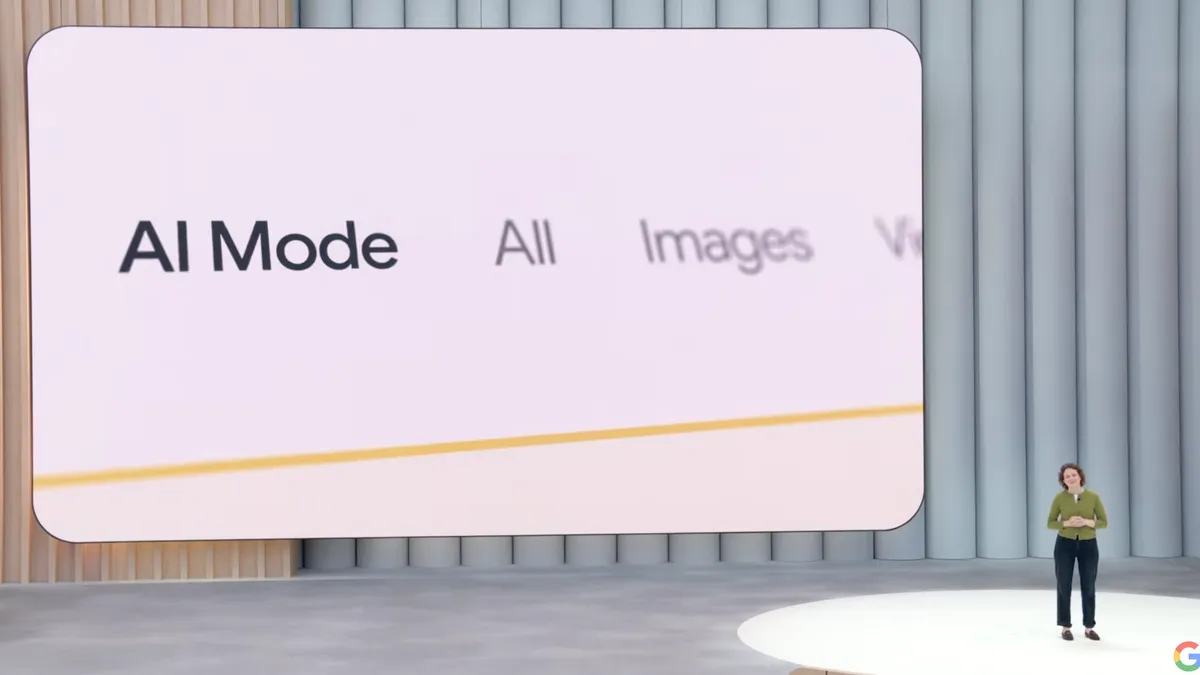
Google’s innovative AI Mode seamlessly integrates into your existing search experience. You’ll find it appearing as an “extra tab on your normal search bar,” providing a clear pathway to its advanced functionalities. Additionally, it introduces “new functionality within your search results,” meaning that even standard searches might subtly incorporate AI-generated insights. For those who prefer a direct route, AI Mode is also “accessible directly at its dedicated URL,” allowing users to jump straight into the conversational AI experience.
At its technical core, AI Mode utilizes a sophisticated process that Google refers to as a “query fan-out technique.” This advanced method enables the system to “better break down your search question,” dissecting complex inquiries into their constituent parts. Crucially, it boasts an “ability to identify and process multiple searches at a time,” allowing it to understand the multifaceted nature of human questions that often involve several underlying queries.
This means if you ask a question with multiple components, AI Mode can simultaneously pursue information related to each element, synthesizing a comprehensive response. This intelligent breakdown of queries moves beyond the traditional linear search approach, mirroring the way human thought processes often branch out to gather related information, ultimately leading to more complete and nuanced answers.
Intelligent Integrations and Deep Search Capabilities
The power of Google’s AI Mode extends beyond basic conversational responses through its planned integrations with other Google applications. Google announced at its I/O conference that it “expects to integrate AI Mode with other Google apps.” This means that the underlying AI model will gain the ability to “get context around your searches from information in your email or calendar.” Imagine asking for restaurant recommendations in a city you plan to visit;
AI Mode could then “suggest places that are near your reservations,” leveraging information from your Google Calendar to provide highly personalized and relevant results. This level of contextual awareness marks a significant leap in search intelligence. Google assures users that they “can always disconnect it from your personal apps,” providing control over their data and privacy.
Furthermore, AI Mode introduces a groundbreaking feature called “Deep Search.” This functionality will be capable of simultaneously analyzing “hundreds of different searches,” far exceeding the scope of traditional queries. It then employs an “AI reasoning model to provide an in-depth, cited response to a question in a matter of minutes.” This represents a monumental shift from simply providing links to synthesizing comprehensive, authoritative answers with supporting references, similar to consulting a highly knowledgeable expert. Beyond textual responses, AI Mode is also enhancing specific search categories.
For “shopping,” the tool allows for “conversational” interaction to “narrow down products” based on specific criteria and even offers innovative features like “virtually trying on outfits.” For “sports and finance questions,” AI Mode will possess the capability to “generate graphs based on complex data sets,” transforming raw data into easily digestible visual insights. While this graphing feature is “expected this summer,” its promise highlights AI Mode’s versatility in handling diverse information needs.
The Shifting Landscape of Search Behavior
The advent of large language models (LLMs) and conversational AI is fundamentally reshaping how users approach information discovery, moving away from simple keywords towards more natural and complex inquiries.
From Keywords to Conversations
The introduction of Google’s new AI Mode comes at a pivotal time, as “large language models are transforming how people get information on the internet.” For decades, internet search has been a transactional process: users entered concise keywords, and search engines returned lists of hyperlinked results. Now, the nature of “questions are becoming more conversational.” This marks a significant departure from the traditional search paradigm. Instead of a terse keyword phrase like “best Father’s Day gifts,” users are increasingly opting for a more natural, dialogue-based approach.
For instance, you might now directly engage with a chatbot or AI Mode and pose a more nuanced query such as, “I’m looking for a Father’s Day gift. My dad likes Roman history, puzzles and wood crafts.” The power of AI Mode lies in its ability to process this complex, multi-faceted request. In response, you won’t simply receive a generic list of links. Instead, you’ll “get a more detailed response, and a conversation,” where the AI can understand the underlying intent, connect disparate concepts, and offer highly personalized suggestions.
This shifts the experience from simply retrieving data to actively engaging with intelligence, where the AI acts as a sophisticated guide rather than just a directory. This conversational approach mimics human interaction, providing a richer, more contextually aware, and ultimately more satisfying search experience that goes beyond merely matching words to actively understanding and fulfilling complex information needs.
The Demand for Intelligence, Not Just Information
Elizabeth Reid, Google’s Vice President and Head of Search, underscores the driving force behind the integration of generative AI into search. She observes that users coming to Google Search are increasingly asking “longer, more difficult questions,” and crucially, “they’re asking more questions” overall. This reflects a growing user expectation for more comprehensive, nuanced, and intelligent responses from their search engine. Integrating generative AI is a direct response to this evolving user behavior and demand. It allows Google to move beyond its traditional role as a mere information retrieval system.
As Reid eloquently puts it, “This is the future of Google search, a search that goes beyond information to intelligence.” This statement encapsulates Google’s ambition for AI Mode. While AI Overviews, introduced at last year’s I/O conference, initially brought this kind of generative AI technology into the main search results page, AI Mode represents an even deeper and more pervasive integration. It fully embraces the chatbot-like experience directly within the search bar, making conversational AI a central component of the search interface.
And for those who might think they can simply “avoid these AI features for a bit longer by sticking with the standard search, think again.” Reid issues a clear warning: “What starts in AI Mode might be everywhere soon.” She explicitly states that “Over time, we’ll graduate many of AI Mode’s cutting-edge features and capabilities directly into the core search experience.” This indicates a clear strategic roadmap where AI-powered intelligence will become an intrinsic, unavoidable part of the everyday Google search for all users, fundamentally redefining how information is accessed and consumed online.
The Future of Search: A Diversified Approach?
While Google’s vision for AI Mode is expansive, some industry experts suggest that a single AI-driven approach may not be universally applicable for all search queries, leading to a more diversified future for information retrieval.
AI Mode: A Specialized Tool
Despite Google’s ambitious rollout of AI Mode, some industry experts express skepticism that an AI tool will be the optimal solution for every single search query. Eugene Levin, President of Semrush, a prominent marketing and SEO tool company, voiced his reservations: “I think the percentage of people who willingly want to use AI Mode for everything is going to be surprisingly low.” Levin suggests that while analysts might currently proclaim AI Mode as the singular future of search, “I think that’s not what’s going to happen.” Instead, he views AI Mode as a more specialized instrument, best suited for specific types of search interactions.
Levin believes that “complex questions that might require a lot of follow-up questions might work well in a chat-style approach.” This is where AI Mode’s conversational capabilities truly shine, allowing users to refine their queries and explore nuances in a dynamic dialogue. However, for simpler, more direct information needs, a traditional search engine might still offer a quicker and more efficient route.
If you’re “just looking for a specific page, resource or basic facts about something like a movie,” a standard search query and a list of links could provide immediate results without the need for an interactive AI conversation, Levin explains. This perspective suggests a future where users intuitively choose the most appropriate search tool for their specific need, rather than adopting a one-size-fits-all approach.
Different Questions, Different Interfaces
Eugene Levin’s perspective on the future of search suggests a more segmented approach, where different types of questions are best served by different user interfaces and experiences. He notes that this kind of breakdown of searches, where users leverage generative AI for certain queries and traditional search engines for others, is “already evident among heavy users of ChatGPT’s search functions.” This real-world usage pattern provides insight into how users naturally segment their information-seeking behaviors based on the complexity and nature of their questions.
Levin points out that for “certain types of questions, like finding financial information,” even individuals who are frequent users of ChatGPT’s search capabilities are “more likely to turn to Google Search rather than asking the chatbots.” This suggests a continued trust in traditional search for highly factual, verifiable, and authoritative data. The implication is that while AI chatbots excel at synthesizing information and engaging in conversational dialogue, users may still prefer the directness and perceived reliability of conventional search for specific, precise data points.
As Levin concludes, “Essentially, there are different types of questions. And for each type of question, there is a best user interface, user experience.” This vision for the future of search posits a more diversified ecosystem, where AI Mode coexists with, rather than entirely replaces, traditional search, allowing users to select the most effective tool for their individual information needs, leading to a richer and more versatile online experience.
Google’s Intelligent Leap Forward
Google’s introduction of AI Mode marks a pivotal moment in the evolution of internet search, fundamentally reshaping how users interact with online information. By integrating a custom version of the Gemini generative AI model, Google is moving beyond traditional keyword searches to offer a conversational, intelligent experience directly within the search bar. This sophisticated new feature, accessible to a broad user base, allows for deeper query understanding through its “query fan-out technique” and promises personalized results via integration with other Google apps, with privacy controls firmly in user hands.
While “Deep Search” promises comprehensive, cited responses and specialized features for shopping, sports, and finance, the shift highlights a broader trend: users are asking longer, more complex questions, demanding intelligence over mere information. Though AI Mode will eventually permeate the core search experience, industry experts like Eugene Levin suggest a nuanced future.
They envision AI Mode as a specialized tool best suited for complex, conversational queries, while traditional search will likely remain optimal for quick, factual lookups. Ultimately, Google’s AI Mode signifies a bold leap towards a more intuitive and intelligent search ecosystem, offering users a diverse toolkit for navigating the ever-expanding digital landscape.

Spring's notable celestial event, the Eta Aquarids meteor shower, is currently active and set to reach its peak intensity around the nights of May 5th and 6th, 2025. This annual Read more

Tonight, Sunday, June 1st, 2025, skywatchers are in for a treat! Our beautiful waxing Moon will share the western part of the constellation Leo with the fiery Red Planet, Mars. Read more

For decades, the dreaded "blue screen of death" (BSoD) has been an unwelcome, yet iconic, sight for millions of Windows users worldwide. Its stark blue background, white text, and Read more

A seemingly innocuous detail in a video broadcast from China's Tiangong space station ignited a surprising debate. The footage, part of a live-streamed science lesson, showcased a glass of clear Read more

The night sky is often a canvas for astronomical wonders, and few are as captivating as the Northern Lights, or Aurora Borealis. This breathtaking natural light display typically graces the Read more

The vast and mysterious depths of the Atlantic Ocean continue to reveal incredible marine life, and recently, researchers have been tracking a truly remarkable specimen. The largest great white Read more