

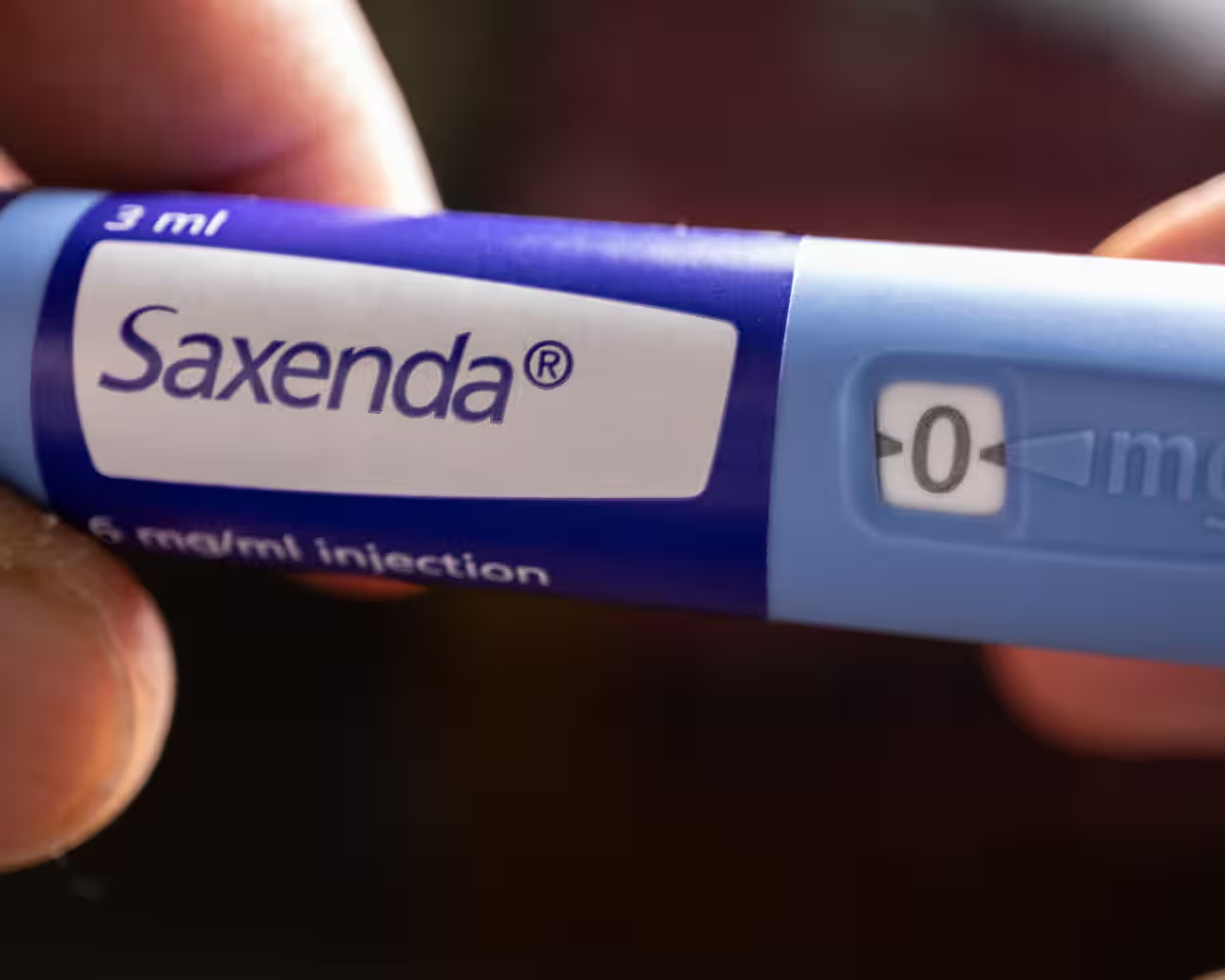
A pivotal new study presented at the European Congress on Obesity in Malaga, Spain, suggests that widely used weight-loss injections, known as GLP-1 receptor agonists (GLP-1RAs), could dramatically reduce the risk of obesity-related cancers by almost 50%.

This groundbreaking finding has led cancer experts to declare the potential advent of a “whole new era of preventive cancer medicine,” transforming the fight against a significant global health threat.
Obesity’s Link to Cancer: A Critical Challenge
Obesity is a well-established risk factor for at least 13 different types of cancer, including common forms like breast, colorectal, pancreatic, ovarian, and kidney cancers, among others. While traditional weight loss methods have long been known to reduce this risk, the recent research indicates that GLP-1RAs offer a protective effect that may go beyond simply shedding excess pounds, hinting at additional biological mechanisms at play.
The Israeli Study: Jabs Versus Surgery
Researchers in Israel conducted a comprehensive study involving 6,000 adults, none with a prior history of cancer. Participants either underwent bariatric surgery or received GLP-1RA medications such as liraglutide (Saxenda), exenatide (Byetta), or dulaglutide (Trulicity).
These medications work by mimicking the natural GLP-1 hormone, which helps regulate blood sugar levels and promotes a feeling of fullness, thereby aiding in weight management.
Surprisingly, despite bariatric surgery leading to approximately twice the weight loss compared to the GLP-1RA medications, the study, published in The Lancet’s eClinicalMedicine, found a broadly similar reduction in cancer risk across both groups. Previous research has shown bariatric surgery can reduce cancer risk by 30-42%.
The new findings suggest that GLP-1RAs achieve comparable risk reduction, implying their protective effects are not solely dependent on the magnitude of weight lost.
Beyond Weight Loss: The Role of Inflammation
Co-lead author Professor Dror Dicker from Hasharon Hospital, Rabin Medical Center, Israel, explained that the protective effects of GLP-1RAs against obesity-related cancers likely stem from “multiple mechanisms, including reducing inflammation.” Chronic inflammation, often associated with obesity, is a known driver of cancer development.
By dampening this inflammatory response, GLP-1RAs could be directly targeting a key pathway for cancer growth, offering a more profound preventative measure than just mechanical weight reduction.
Professor Mark Lawler, an internationally renowned cancer research expert from Queen’s University Belfast, echoed this sentiment, noting that the biological plausibility for these findings is strong. “Biologically, this makes sense, as targeting GLP-1 dampens down inflammation, one of the hallmarks of cancer,” he stated.
He emphasized that while the current study is observational and requires cautious interpretation, the data is “very exciting” and suggests that GLP-1s could cut the risk of obesity-related cancers by nearly 50%, a truly “transformational” prospect.
The Promise of Next-Generation Treatments
The research also pointed towards even greater potential with newer GLP-1RA drugs. A separate study presented at the conference and published in the New England Journal of Medicine directly compared the efficacy of different weight-loss jabs, revealing that patients taking Mounjaro typically experienced a 20.2% drop in body weight, significantly more than the 13.7% observed with Wegovy.
Professor Dicker suggested that these “new generation, highly potent GLP-1RAs with higher efficacy in weight reduction may convey an even greater advantage in reducing the risk of obesity-related cancers,” although he cautioned that further research is needed to ensure they do not increase the risk of non-obesity-related cancers.
A New Dawn for Cancer Prevention
The implications of these findings are immense for public health and preventive medicine. Professor Jason Halford, former president of the European Association for the Study of Obesity and head of psychology at Leeds University, believes these drugs have “the potential to be a new dawn,” not just for prevention but also for improving outcomes in patients newly diagnosed with cancer.
In response to the compelling evidence, a team of 54 international experts from 12 different countries issued a joint statement at the conference, advocating for weight-loss drugs to be prioritized for cancer prevention trials. Consequently, a UK team of scientists at the University of Manchester, supported by Cancer Research UK, is planning a large-scale clinical trial involving tens of thousands of patients. They hope to commence this pivotal research within the next three to five years.
Dr. Matthew Harris from the Manchester Cancer Research Centre highlighted the “genuinely fantastic weight loss” provided by these jabs and their potential as a “population-scale intervention,” something previously unachievable in widespread obesity management and cancer prevention. This research represents a crucial step towards a future where obesity-related cancers might be significantly mitigated through accessible pharmaceutical interventions.

The human immune system possesses remarkable capabilities in detecting and eliminating threats, including cancerous cells. At the forefront of this defense are CD8⁺ T cells, often referred to as the Read more

Fatty liver disease is a growing health concern characterized by the accumulation of excess fat within liver cells. This condition arises when the body either produces too much fat or Read more

Illinois is currently grappling with a severe and escalating nurse shortage, a critical issue with profound implications for patient access to timely and quality medical care. This persistent problem Read more

The field of autism research has seen significant advancements over the past two decades. Experts from around the globe convene annually at events like the International Society for Autism Research Read more

Grapes, regardless of their color, are celebrated for being a delicious and nutritious fruit. Both black and green varieties are rich in essential nutrients, offering a wide array of health Read more

Many people want to feel their very best. They seek more than just not being sick. They want true vitality. They want their bodies to work well. This is the Read more