

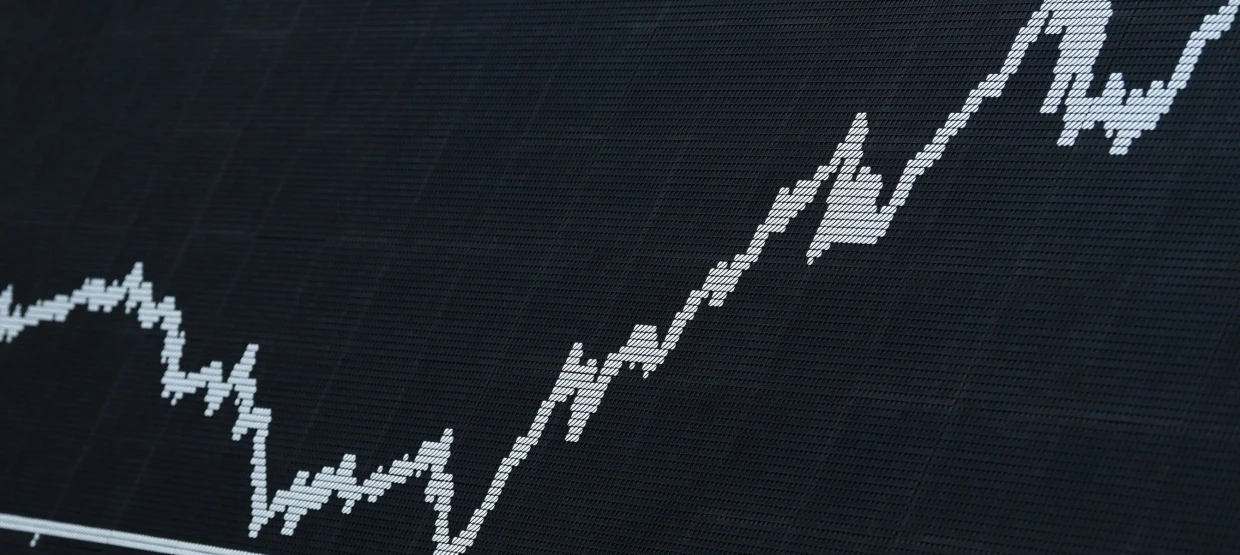
The global financial landscape is experiencing a period of heightened volatility, directly influenced by escalating geopolitical tensions.
Following a recent United States attack on Iranian nuclear facilities, markets worldwide have reacted with a mix of immediate shock and lingering uncertainty. This military action has reintroduced significant risk into investor calculations, leading to noticeable shifts in key asset classes. The prevailing sentiment among market participants is one of caution, as the potential for wider conflict looms large.
The phrase “the war with Iran hangs like a Damocles sword over the heads of investors” perfectly encapsulates the prevailing mood. This ancient metaphor, signifying an ever-present danger, reflects the anxiety that a prolonged or intensified conflict could severely disrupt global stability and economic activity. While initial market shocks might be quickly absorbed, the underlying geopolitical uncertainties are expected to continue influencing investor behavior in the coming weeks.
The impact has been broad, affecting everything from cryptocurrencies to traditional stock indices, underscoring the interconnectedness of global finance with international political developments. This situation demands a close examination of how various markets are responding to the evolving crisis.
Cryptocurrency Volatility: Bitcoin’s Dive Below $100,000
The cryptocurrency market, often a barometer of investor sentiment during times of global uncertainty, reacted swiftly to the news of the US attack.
Bitcoin’s Immediate Reaction and Subsequent Dip
The world’s leading cryptocurrency, Bitcoin (BTC), experienced significant price fluctuations in the wake of the US attack on Iranian nuclear facilities. On Sunday, following the news, Bitcoin’s value began a downward trajectory, eventually falling below the significant psychological and technical price point of $100,000 US dollars. This drop marked a notable reversal from its recent bullish momentum. At its lowest point during this period of heightened volatility, Bitcoin was observed trading at approximately $99,765. This dip below the six-figure mark sent ripples through the cryptocurrency community, prompting concerns among investors.
Interestingly, Bitcoin had initially shown a degree of resilience. “An initial shock immediately after the news broke had been quickly shaken off,” suggesting that the market had initially priced in a rapid recovery or perceived the incident as isolated. This initial bounce led expert Timo Emden from Emden Research to comment that this behavior “spoke for short legs of political markets,” implying that politically driven market reactions tend to be fleeting. However, this optimism proved premature.
The subsequent sustained drop indicated that “investors seem to have become more anxious again.” The initial “shaking off” of the shock might have been a knee-jerk reaction, but as the implications of the geopolitical situation began to sink in, a more cautious and fearful sentiment re-emerged, pushing Bitcoin back below a critical threshold.
Broader Crypto Market Impact
The impact of the escalating geopolitical tensions was not confined solely to Bitcoin; it reverberated across the broader cryptocurrency market. Other major digital assets also experienced declines, indicating a widespread risk-off sentiment among crypto investors. “Other crypto values such as XRP or Solana also suffered losses,” mirroring Bitcoin’s downward trend. XRP, the native cryptocurrency of the Ripple network, and Solana, a high-performance blockchain platform, are both significant players in the altcoin market. Their concurrent decline suggests that the geopolitical uncertainty triggered a general move out of riskier assets within the crypto space.
This collective downturn highlights the increasing interconnectedness of the cryptocurrency market with global macroeconomic and geopolitical events. While cryptocurrencies were once seen by some as a hedge against traditional market volatility, recent trends demonstrate their susceptibility to external shocks, particularly those involving major global powers and regions vital for energy production.
The renewed anxiety among investors signals a period where geopolitical considerations will likely continue to influence crypto price action, as market participants weigh the potential for further escalation and its economic repercussions. The cryptocurrency market, despite its decentralized nature, remains highly sensitive to the ebb and flow of global stability.
Traditional Markets: Dax and Wall Street Losses
The impact of the US attack extended beyond cryptocurrencies, affecting major traditional stock indices as well, albeit with nuances related to trading volumes.
Weekend Trading and Limited Volume
The news of the US attack also had a discernible effect on traditional stock markets, particularly during weekend trading hours. “In weekend trading, the Dax, as well as the stock markets on Wall Street, lost several hundred points.” This indicates a significant immediate reaction, with major indices in both Germany (Dax) and the United States (Wall Street) registering substantial declines. However, a crucial caveat accompanies this observation: “The volume of this weekend trading is, however, limited.”
Weekend trading on major stock exchanges typically occurs outside of regular business hours and involves a much smaller pool of participants and overall trading activity compared to weekday sessions. This lower volume can sometimes exaggerate price movements, as fewer trades are needed to shift market prices significantly.
Therefore, while the point losses were notable, their ultimate long-term significance would depend on how markets react during the full trading sessions when they reopen. Nevertheless, even in limited trading, the declines serve as a clear indicator of initial investor concern and a collective decision to de-risk portfolios in response to the geopolitical news.
Divergent Regional Reactions and Sectoral Impacts
Despite the overarching climate of geopolitical uncertainty, market reactions were not uniformly negative across all regions and sectors. As Timo Emden noted, the “war with Iran could continue to hang like a Damocles sword over the heads of investors.” This lingering concern suggests that investors will remain preoccupied with geopolitical risks in the coming week. However, the situation is not entirely clear-cut, as “the US attack on Iran could also lead to clarity and a quick end to the conflict,” a scenario that some optimists might be banking on.
Indeed, some regional markets exhibited a surprisingly positive, or at least less negative, reaction. In Tel Aviv, the TA-35 index actually gained 1.2 percent. This rally was largely driven by “bank stocks,” which were “responsible for most of the gains here.” This could suggest a perception that regional banks might benefit from increased stability or potentially higher interest rates in a period of uncertainty. Conversely, the defense sector saw mixed reactions.
While “the arms supplier Elbit Systems lost more than 2 percent,” this could be due to specific company news or a broader assessment that the immediate military action might not translate into sustained major conflicts, which would usually benefit defense contractors.
Moving further into the Middle East, the market reactions continued to diverge. In Cairo, the EGX 30 index experienced an even more significant jump, rising by 2.7 percent. This strong performance could be attributed to various local factors or a perception of reduced regional risk. The indices in Kuwait and Oman also saw positive movement, each gaining 0.4 percent. These Gulf states are significant oil producers, and their market performance can be influenced by perceptions of oil price stability or regional security. However, the picture was not entirely positive in the Gulf region.
In Riyadh, the Tadawul All Share Index gave up its earlier gains and ultimately sank by 0.3 percent. This mixed bag of reactions across regional markets underscores the complex and often localized interpretations of geopolitical events, where different countries and sectors might perceive risks and opportunities differently.
The Crucial Role of the Strait of Hormuz
The Strait of Hormuz remains a focal point for investor anxiety, given its critical importance to global oil trade.
Geopolitical Volatility and Energy Market Fears
The primary source of anxiety for investors, particularly concerning the potential for an escalated conflict with Iran, revolves around the Strait of Hormuz. This narrow sea lane, located at the mouth of the Persian Gulf, is arguably the most important oil transit chokepoint in the world. Its strategic significance cannot be overstated; a substantial portion of the world’s seaborne oil, liquefied natural gas (LNG), and other energy products pass through this strait daily.
Therefore, any threat of disruption or, more severely, a “possible Iranian blockade of the Strait of Hormuz” carries immense implications for global energy markets and the wider economy.
Such a blockade would severely restrict the flow of oil, leading to a dramatic surge in crude oil prices, which would, in turn, impact fuel costs, transportation, manufacturing, and consumer spending worldwide. This ripple effect could potentially trigger global inflation or even a recession, depending on the duration and severity of the disruption. The fear of this scenario is a “Damocles sword” for investors because it represents a catastrophic risk that could fundamentally alter the global economic outlook.
Therefore, the question of “how the regime in Tehran now reacts” to the US attack is not merely a political or military concern; it is a critical economic determinant that holds global investors in suspense. The potential for such a reaction means that geopolitical considerations will continue to heavily weigh on market sentiment and decision-making in the days and weeks to come.
Sectoral Winners and Losers: Defense and Beyond
While broader markets reacted negatively, specific sectors showed divergent trends, notably defense.
Defense Sector Gains Amid Uncertainty
In times of escalating geopolitical tensions and conflict, certain sectors often experience a direct and immediate impact on their market performance. The defense sector is typically one of the first to react. In the context of the US attack and the heightened risk of conflict with Iran, “defense companies such as Rheinmetall, Renk, and Hensoldt recorded gains.” These companies are major players in the armaments industry, manufacturing a wide range of military equipment, from vehicles and artillery to sensors and electronic warfare systems.
The increase in their stock prices reflects investor expectations that prolonged conflict or increased global instability will lead to higher defense spending by nations. Governments may accelerate procurement of new equipment, replenish existing stockpiles, or invest more heavily in defense capabilities in response to perceived threats.
While the immediate gains might be speculative, they underscore the market’s assessment of where capital might flow in a more volatile geopolitical environment. This dynamic contrasts sharply with the broader market declines, highlighting how specific industries can perform counter-cyclically during periods of heightened global risk. The performance of these defense stocks will be closely watched as an indicator of investor sentiment regarding the potential for sustained military engagement or heightened international tensions.
Broader Market Sensitivity and Future Outlook
The varied market reactions observed, from Bitcoin’s sharp fall to regional stock rallies and defense sector gains, underscore the complex interplay of geopolitical events and financial markets. Expert opinions, such as Timo Emden’s, continue to emphasize that “geopolitical uncertainties are likely to continue to occupy investors in the coming week.” This means that market participants will remain highly sensitive to any further developments, pronouncements from political leaders, or military actions in the Middle East.
The key determinant for the future trajectory of global markets will be the perceived path of the conflict. A rapid de-escalation or a clear resolution, as some analysts optimistically hope for, could lead to a swift recovery in risk assets. Conversely, any indication of escalation, particularly involving the Strait of Hormuz or other critical global supply chains, could trigger further, more severe downturns.
Investors will be closely monitoring news headlines, statements from governments, and, critically, the price of oil, which serves as a sensitive barometer of geopolitical risk in the Middle East. The limited volume of weekend trading means that the full extent of market reaction will only become clear as major exchanges resume full trading activity in the coming days.
Wary Market Awaits Further News
The US attack on Iranian nuclear facilities has sent immediate ripples through global financial markets, with Bitcoin dipping below $100,000 and major indices like the Dax and Wall Street experiencing losses in limited weekend trading. While some Middle Eastern markets showed resilience or even gains, the overriding sentiment among investors remains one of anxiety, with the potential for further escalation in the Middle East, particularly concerning the Strait of Hormuz, looming as a significant risk factor.
As defense stocks like Rheinmetall saw gains, the broader market awaits Tehran’s response, highlighting the critical role geopolitical events play in shaping investor sentiment and asset valuations. The coming week will be crucial as markets fully react to the evolving situation, with volatility expected to persist as uncertainty hangs over the global economic outlook.
A significant misconception has been circulating: that John Deere is ceasing its manufacturing operations in the United States. It's time to set the record straight. Far from freezing or shutting Read more

Amidst recent market fluctuations, notably influenced by factors including trade policy and a challenging market phase, the group of leading technology companies known as the "Magnificent Seven" has seen shifts Read more

The total number of Subway restaurant locations within the United States has fallen once again, dropping below the 20,000 threshold for the first time in two decades. This decrease reflects Read more

Halliburton (NYSE:HAL), a global provider of products and services to the energy industry, has received a consensus rating of "Moderate Buy" from twenty-one research firms covering the company. This Read more

In a significant and widely discussed declaration made on his social media platform, X, on Saturday afternoon, July 5, 2025, billionaire entrepreneur Elon Musk announced the official formation of a Read more

The cryptocurrency market is abuzz with the emergence of Neo Pepe ($NEOP), a new digital currency quickly gaining recognition as a top crypto presale of 2025. Beyond its distinctive presence, Read more